
Friendship & Social Connection
Why Do Some Children Struggle to Make Friends at School?
Understanding social exclusion, peer pressure, friendship breakdowns and why finding the right friends can be harder than it seems.
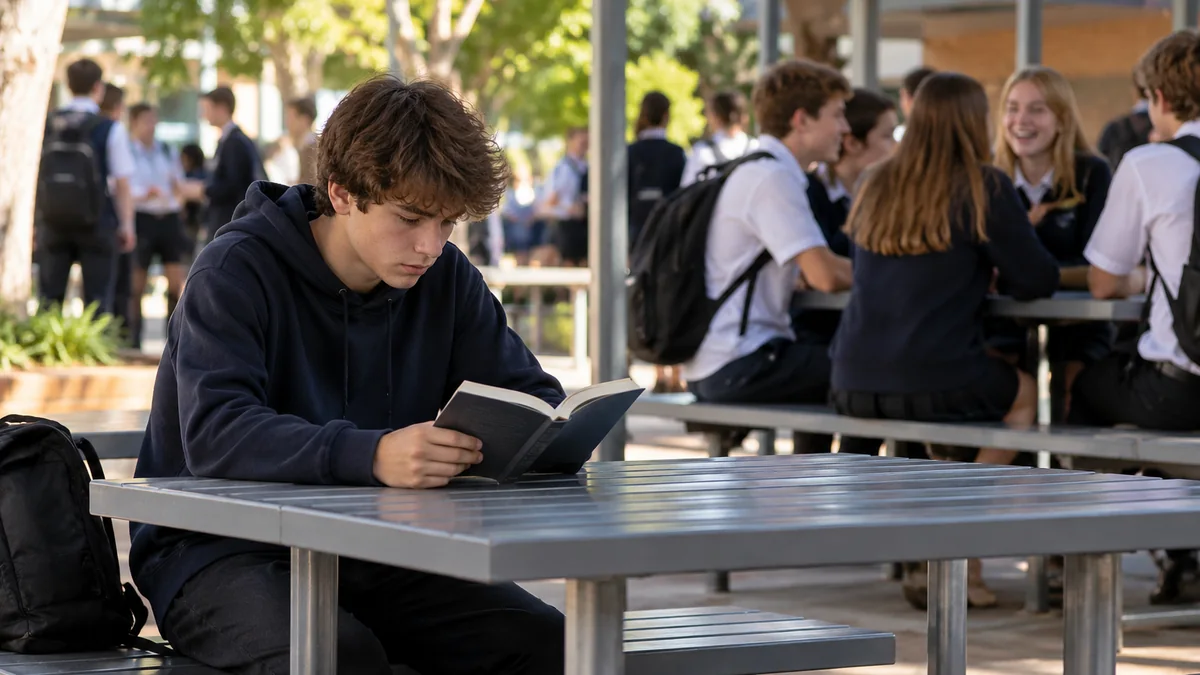
Every school playground has them. Children sitting alone at lunchtime, walking around without a friendship group or finding something to occupy themselves while everyone else socialises.
It's easy to assume these children are shy, lonely or struggling with social skills.
Sometimes that's true. But sometimes the explanation is far more complicated.
A child might be excluded because they look, sound or behave differently. Another might have lost their friendships following a disagreement. Some deliberately distance themselves from peers whose behaviour makes them uncomfortable.
And others simply enjoy their own company.
Before asking why a child doesn't fit in, perhaps we should ask what happened to make them feel they don't belong.
Published Updated
1. When Being Different Makes You Stand Out
Schools bring together children from different backgrounds, with different personalities, interests and abilities.
In an ideal world, those differences would be celebrated. Unfortunately, school social environments don't always work that way.
A child might stand out because they're unusually tall or short, have an accent, wear different clothing, have a disability or simply enjoy activities their classmates don't understand.
Research by Sweeting and West examining teasing and bullying among 11-year-olds found associations between certain individual characteristics and experiences of bullying.
Importantly, not every difference was associated with increased bullying. Nevertheless, the research highlights how children's characteristics and peer environments can influence their experiences.
Sometimes children who fear becoming targets themselves participate in excluding others to maintain their position within a friendship group.
For the child on the receiving end, the message can be devastating: being yourself is somehow unacceptable.
The problem isn't necessarily that the child is different. It's that their differences aren't being accepted.
2. When Friendship Groups Become Exclusive
Friendship groups are an important part of school life. They provide companionship, shared experiences and a sense of belonging.
However, they can also develop complicated social dynamics.
Some children become influential within a group. Others find themselves adjusting their behaviour to remain accepted.
Exclusion isn't always obvious.
A child might stop receiving invitations, find conversations ending when they approach or discover that classmates have begun avoiding them.
Australian child psychology resources identify these behaviours as potential forms of social exclusion, particularly when they are deliberate and repeated.
What makes this especially difficult is that a child can be surrounded by classmates every day while feeling completely alone.
They might attend the same school, sit in the same classrooms and participate in the same activities as their former friends.
But socially, they no longer belong.
3. When One Disagreement Changes Everything
Not every friendship breakdown begins with bullying or deliberate exclusion.
Sometimes it starts with an ordinary disagreement.
Imagine a teenager who has spent years developing friendships with a group of classmates.
They celebrate birthdays together, spend lunchtimes together and regularly visit each other's homes.
Then a disagreement develops between two members of the group.
As the relationship deteriorates, other friends feel pressured to take sides.
Some may agree with one person. Others may simply choose the side that allows them to maintain the greatest number of friendships.
Eventually, one teenager finds themselves outside the group.
The painful part isn't necessarily losing one friendship. It's discovering that a disagreement with one person can cost you an entire social circle.
This can be particularly difficult during the later years of secondary school.
By Years 10 and 11, many friendship groups have developed over several years. Students have established routines, shared histories and social expectations.
Joining another group isn't always as simple as walking up and introducing yourself.
A teenager who previously had a busy social life may suddenly find themselves spending lunchtimes alone.
And because the other students are still there, the loss can be a daily reminder of friendships that once existed.
4. When Belonging Comes at a Price
There is another reason children sometimes lose friendships: they decide they no longer want to participate in the activities their friends enjoy.
During adolescence, friendship groups can exert considerable influence over behaviour.
A teenager might find their friends experimenting with drugs, bullying other students or participating in activities that conflict with their personal values.
They face a difficult choice.
Do they participate to maintain their friendships, or step away and risk becoming isolated?
Some choose to walk away.
They might spend lunchtimes training for athletics, reading in the library or pursuing activities independently.
To an outside observer, they may appear socially isolated.
But their decision could reflect independence, confidence and good judgement.
Sometimes a child isn't struggling to fit in. They're choosing not to fit into a group that isn't right for them.
That doesn't mean the resulting loneliness is any less real.
Making the right decision can still come at an emotional cost.
5. Being Alone Isn't Always the Same as Being Lonely
Consider two teenagers sitting alone during lunchtime.
One enjoys reading and appreciates having a quiet break from the demands of the classroom.
The other is reading because their former friends no longer include them.
From a distance, they look almost identical.
Yet their experiences are very different.
One has chosen solitude. The other may be using an enjoyable activity to cope with unwanted isolation.
There is nothing inherently wrong with spending time alone.
Some children genuinely enjoy independent activities and need opportunities to recharge.
The important question isn't simply whether a child has friends.
It's whether they're satisfied with their social connections and have opportunities for companionship when they want them.
Parents and teachers can help by asking questions without making assumptions.
Does the child enjoy spending time alone? Would they prefer to have someone to share their interests with? Have friendships recently changed?
Understanding the circumstances matters more than counting how many friends a child has.
6. Why Making New Friends Can Be Difficult
Adults sometimes underestimate how challenging it can be for teenagers to establish new friendships within an existing school environment.
A common suggestion is simply to join another group.
But friendship groups aren't always open to new members, particularly when students have known each other for years.
There may also be reputational concerns.
If a teenager has experienced a public disagreement, other students might hesitate to become involved, even when they have nothing against that person.
For children who are already shy, anxious or have experienced rejection, approaching another group can feel particularly daunting.
And unlike adults, who may change workplaces, join clubs or move to different communities, school students often have limited control over their daily social environment.
They encounter the same people, in the same places, five days a week.
Sometimes what a child needs isn't another lesson in how to make friends.
They need access to a different group of people.
7. Finding Friendships Beyond the School Playground
School friendships are often shaped by circumstance.
Children attend the same school because they live in the same area, not necessarily because they share interests or compatible personalities.
Outside school, friendships can develop differently.
A teenager who struggles socially at school might feel comfortable among teammates at an athletics club.
A child who enjoys art may connect with others through a creative workshop.
And a young person who loves gaming might discover friendships with children who share their enthusiasm for Minecraft or Fortnite. Our article “Can Online Gaming Help Lonely Children Make Friends?” explores how shared activities can create opportunities for connection.
These environments offer something important: a common interest.
Rather than beginning with the pressure to make friends, children begin with something they enjoy doing together.
Conversation can develop naturally through shared experiences.
A child might initially participate because they enjoy the activity, then gradually begin looking forward to spending time with the people involved.
This is particularly relevant when local friendship opportunities are limited.
Different social experiences may also shape which environments feel comfortable; our article “Can Online Gaming Help Autistic Children Make Friends?” discusses this in more detail.
Online activities can introduce children to peers beyond their immediate school community, although appropriate supervision, safeguarding and age-matched participation remain important.
8. How Can Parents Help?
When parents discover their child is spending lunchtimes alone, their instinct is often to find an immediate solution.
But understanding the reason should come first.
A child who has experienced bullying may need school intervention and protection.
Someone navigating a friendship breakdown may benefit from emotional support, time and opportunities to establish new connections.
A teenager resisting negative peer pressure may need reassurance that maintaining their values was worthwhile, even if it cost them friendships.
And a child who genuinely enjoys solitude may not need intervention at all.
Parents can also explore activities outside school that align with their child's interests.
Sport, creative programs, community groups and appropriately supported online activities can provide opportunities to meet people without the established social dynamics of their school environment.
The objective shouldn't be to force friendships.
It should be to create opportunities where positive relationships can develop.
9. How Does FriendWorX Approach Friendship?
FriendWorX was developed around a simple idea: children can connect through activities they already enjoy.
Through cooperative online gaming, participants join small, age-matched groups of up to four children, supported by an adult Guide. Our article “Could Online Gaming Be an Overlooked Tool for Helping Children Connect?” looks further at the role of structured and supported gaming.
Rather than placing children in unrestricted public gaming environments, sessions provide structured opportunities for teamwork, communication and shared experiences.
Children can participate through common interests without needing to navigate an established school friendship group.
The same participants can spend time together across scheduled sessions, creating opportunities to become familiar with one another.
FriendWorX cannot guarantee friendships or replace the important role of schools, families and local communities.
However, it offers another environment in which children may discover people who appreciate their interests, personalities and contributions.
Finding the Right People Matters
A child sitting alone at lunchtime doesn't tell us the whole story.
They might be different from their classmates, recovering from a friendship breakdown, resisting peer pressure or simply enjoying a quiet moment.
What matters is understanding their experience rather than assuming they need to change.
Every child deserves opportunities to develop friendships where they feel accepted, respected and valued.
But friendship should never require a child to abandon their interests, compromise their values or pretend to be someone they're not.
Sometimes the answer isn't teaching a child how to fit into the group around them.
It's helping them find a group where they already belong.
Sources and Further Reading
- Social Exclusion at School (Child Psychologist Australia)
- Being different: Correlates of the experience of teasing and bullying at age 11 (Sweeting, H. & West, P., 2001)